
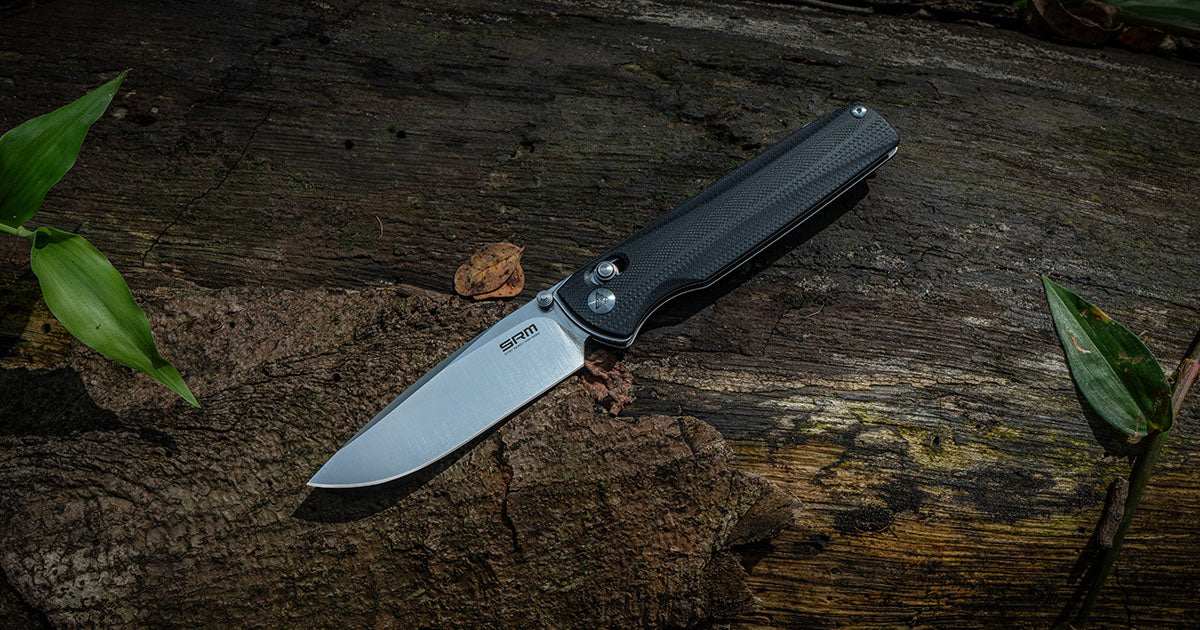
Whether you're opening packages, cutting rope, preparing food on a camping trip, or handling everyday utility tasks, a reliable EDC knife is one of the most practical tools you can carry. But with hundreds of options on the market — each with different steels, lock mechanisms, blade shapes, and handle materials — choosing the right everyday carry knife is rarely straightforward.
This guide breaks down every decision point so you can choose a knife that actually fits your life, your budget, and your carry style.
What Is an EDC Knife?
An EDC knife (everyday carry knife) is a compact, folding blade designed to be carried daily for light-to-medium utility tasks. Unlike fixed blades or tactical knives, EDC knives prioritize portability, ease of one-handed deployment, and legal carry compliance over raw cutting power.
The best EDC knives share four qualities:
- Compact enough to sit in a pocket without discomfort
- Light enough to forget it's there — ideally under 3.5 oz (100g)
- Fast to deploy — a thumb stud, flipper tab, or assisted opening mechanism
- Easy to sharpen — so it stays functional week after week
How to Choose an EDC Knife: 5 Key Factors
1. Blade Steel — The Most Important Decision
Blade steel determines edge retention, corrosion resistance, and how easy the knife is to sharpen. Here's how the most common steels compare:

Practical recommendation: For most users, 14C28N hits the best balance of performance, corrosion resistance, and affordability. It holds an edge through daily use, won't rust if you forget to dry it, and sharpens easily at home. D2 is the upgrade pick if you frequently cut cardboard, rope, or other hard materials.
See our recommended picks by steel type:
- Best 14C28N EDC knife: SRM Scout 7229-GB — 2.72" blade, G10 handle, ceramic ball bearing pivot
- Best D2 EDC knife: SRM Terrier 258L-GB — 3.65" drop point, G10 handle, Ambi Lock
2. Blade Length — Matching the Law and Your Use Case
Blade length is the most legally significant spec on any EDC knife. In most U.S. states, the legal carry limit for folding knives is 3–4 inches, though this varies by jurisdiction. Always check your local laws before purchasing.
- Under 3 inches — Ultralight carry, office-friendly, ideal for letter opening, food prep, fine tasks
- 3–3.5 inches — The EDC sweet spot; handles most daily tasks without drawing attention
- 3.5–4 inches — Greater utility for outdoor use; may attract more attention in urban carry
SRM knives are predominantly designed in the 3–3.6 inch range — the functional center of gravity for true everyday carry.
3. Lock Mechanism — Safety and One-Handed Operation
Liner Lock — The most common. A spring-steel liner snaps behind the blade when open. Lightweight and simple, but it requires two hands to close safely.
Frame Lock — Similar to a liner lock, but the lock bar is part of the handle frame itself. Stronger and more tactile; common on titanium-handled knives.
Ambi Lock (Compression Lock) — The blade is locked by a spring inside the handle spine. Can be closed with one hand without exposing fingers to the edge. SRM's proprietary Ambi Lock enables ambidextrous use and single-hand operation — a genuine functional advantage for working environments. See it in action on the SRM Terrier 258L-MG2.
Axis / Ball Bearing Lock — Smooth, spring-loaded, ambidextrous. Found on premium knives. Offers very fast opening and closing.
For beginners: A liner lock or frame lock is the most intuitive. Intermediate users should consider an Ambi or compression-style lock for one-handed convenience.
4. Handle Material — Grip, Weight, and Feel

G10 is the most practical choice for daily carry — textured, impervious to moisture and temperature, and extremely durable. Our SRM Scout 7229-GB and SRM Terrier 258L-GB both feature textured G10 scales. Micarta develops a patina over time and offers the best grip in wet conditions — see the SRM Terrier 258L-MG2 for a premium Micarta option. Titanium is the premium choice for enthusiasts willing to pay for weight savings and long-term aesthetics.
5. Pivot System — Smooth Deployment Matters
A quality pivot system determines how the blade opens and how long that smooth action lasts. Ceramic ball bearing pivots are now standard on mid-range and premium EDC knives, offering faster, smoother, and more consistent deployment than traditional washers. All SRM knives use either steel or ceramic ball bearings — browse the full SRM EDC knife collection to find your match.
EDC Knife Size Guide: Which Blade Length Is Right for You?
You want a knife under 3 inches if:
- You work in a formal office environment
- You carry in a jurisdiction with strict blade length laws
- Weight and pocket profile are the top priorities
You want 3–3.5 inches if:
- You want the best all-purpose EDC for daily tasks
- You alternate between urban and outdoor environments
- You want the broadest selection of quality options
The SRM Scout 7229-GB is a perfect example of a compact, office-friendly carry in this range.
You want 3.5–4 inches if:
- You spend significant time outdoors, camping, or hiking
- Your primary tasks are heavier (cardboard breakdown, food prep, rope cutting)
- Legal carry limits in your area allow it
The SRM Terrier 258L-GB at 3.65" covers this range with a D2 blade built for demanding use.
Top 3 Common EDC Knife Mistakes (and How to Avoid Them)
Mistake 1: Choosing by Look, Not by Use Case
Damascus blades look stunning. But if you're carrying a knife to open boxes every day, edge retention on Damascus varies widely and maintenance is higher. Pick the steel for what you'll actually do with it.
Mistake 2: Ignoring the Clip Position
Tip-up vs. tip-down carry matters for draw speed and safety. Most experienced EDC users prefer tip-up carry for faster, more natural deployment. Check that the clip is reversible or position the knife where you naturally reach. SRM's Ambi Clip solves this — it repositions without tools, left or right side.
Mistake 3: Never Sharpening It
A dull EDC knife is worse than no knife — it requires more force, causes more fatigue, and increases slip risk. For 14C28N and similar steels, a simple ceramic rod maintains a working edge in under five minutes. Plan for a sharpening every 4–6 weeks, depending on use.
How to Maintain Your EDC Knife
- Clean after use: Wipe the blade with a dry cloth after cutting anything acidic, salty, or wet. Even stainless steels can spot-rust if residue sits for days.
- Lubricate the pivot: A single drop of knife oil on the pivot every few months keeps the action smooth and prevents wear.
- Sharpen at the right angle: Most EDC knives are factory-sharpened at 15–20° per side. Maintaining that angle is more important than the tool you use.
- Store correctly: If you won't be using it for weeks, wipe it down with a light oil coating first.
Why Factory-Direct EDC Knives Deliver Better Value
The traditional knife retail chain — factory to distributor to retailer — adds 40–80% to the final price. Factory-direct brands like SRM Knives eliminate that markup, which is why you can get a ceramic ball bearing pivot, 14C28N steel, and a lifetime warranty for $30–$55 — a price point that would only get you budget stainless at a retail knife shop.
The right question is not how much does it cost, but what do I get per dollar? Explore the full SRM knife collection — every model ships free from the US warehouse with a limited lifetime warranty.
Frequently Asked Questions About EDC Knives
What is the best EDC knife for beginners?
For a first EDC knife, look for a folding knife with 14C28N or similar mid-grade stainless steel, a blade between 3 and 3.5 inches, and a liner lock or frame lock. A budget of $25–$55 gets you a genuinely capable knife from a factory-direct brand. The SRM Terrier 258L-GB is an excellent starting point — D2 steel, G10 handle, and SRM's proven Ambi Lock system.
Are EDC knives legal to carry?
In most U.S. states, folding knives under 3–4 inches are legal to carry. However, laws vary significantly by state, county, and city. Some municipalities restrict assisted-opening knives or any knife with a locking mechanism. Always verify local laws before carrying.
What steel is best for EDC knives?
For most people, 14C28N is the best all-around EDC steel — excellent corrosion resistance, good edge retention, and easy to sharpen at home. If you do heavier cutting tasks, D2 offers better edge retention at the cost of slightly lower corrosion resistance. Browse SRM's D2 knife collection or the full EDC lineup.
How often should I sharpen my EDC knife?
For daily carry with light-to-medium tasks, sharpen every 4–8 weeks. You'll know it's time when you notice increased cutting resistance or the blade starts to skip across paper instead of slicing cleanly.
What is the difference between an EDC knife and a tactical knife?
EDC knives prioritize compact size, lightweight design, and legal everyday carry. Tactical knives are typically larger, often fixed-blade, and designed for defensive or heavy-duty field use. Most EDC knives are folding knives; most tactical knives are not.
What does ambi lock mean on an EDC knife?
An ambi lock (ambidextrous lock) allows the knife to be closed safely with one hand, using either the left or right hand. Unlike a liner lock — which requires the non-dominant hand to disengage the lock — an ambi or compression-style lock lets you fold the knife one-handed without putting your fingers near the blade's edge. Learn more on our Ambi Lock collection page.
The Bottom Line
The best EDC knife is one you'll actually carry every day. That means the right weight, the right size for your environment, the right steel for your tasks, and a lock you trust. Spend more attention on those four specs than on aesthetics or brand names, and you'll find a knife that lasts for years.
Ready to choose? Browse the SRM EDC knife collection — factory-direct pricing, limited lifetime warranty, free US shipping.
Last updated: March 2026 — SRM Knives. Factory-direct EDC knives. Limited lifetime warranty. Ships from the US.